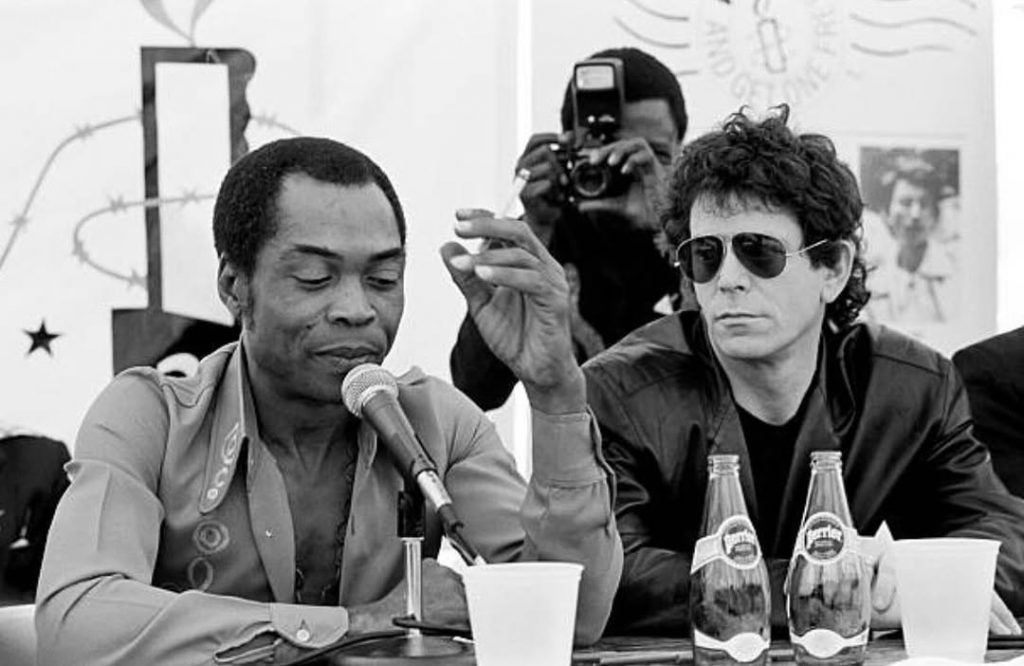
This is not the first time Fela Anikulapo-Kuti has received recognition after his death, but this honour marks a historic moment.
The Afrobeat pioneer was awarded a posthumous Grammy Lifetime Achievement Award on January 31, 2026, becoming the first African artist to receive this recognition from the Recording Academy. The award came shortly after a controversial comparison between the late legend and contemporary artist Wizkid sparked debates across Nigerian social media.
The Grammy Lifetime Achievement Award Ceremony
The Recording Academy presented Fela with the award at the 2026 Special Merit Awards ceremony in Los Angeles on Saturday, January 31. His children, Yeni, Femi, Kunle, and Shalewa Kuti, accepted the honor on behalf of their late father.
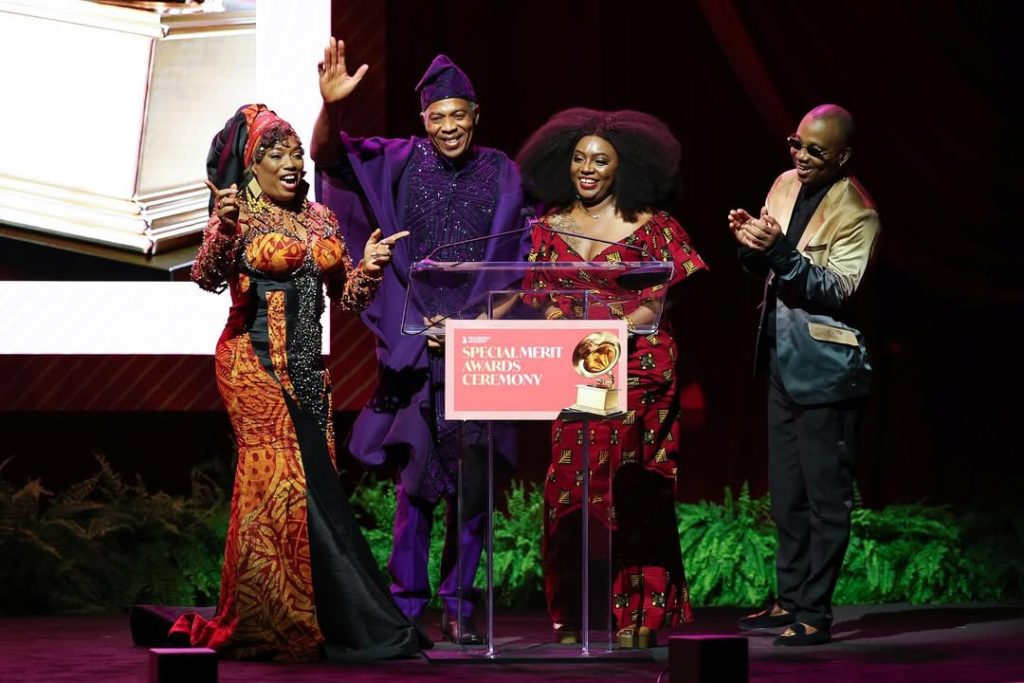
Fela received this recognition alongside Whitney Houston, Chaka Khan, Cher, and Paul Simon. Harvey Mason Jr., CEO of the Recording Academy, described the honorees as “an extraordinary group whose influence spans generations, genres, and the very foundation of modern music.”
The Grammy Lifetime Achievement Award was established in 1962 to honor performers who have made outstanding creative contributions to recording. Past recipients include Louis Armstrong, The Beatles, and James Brown.
Fela Kuti’s Musical Legacy
Fela Anikulapo-Kuti was born in 1938 in Ogun State, Nigeria. He created the Afrobeat genre in the 1960s by combining highlife and Yoruba music with American jazz, funk, and soul. During his lifetime, he composed, recorded, and performed over 200 songs. He died on August 2, 1997.
The Recording Academy noted that Fela’s influence spans generations, inspiring artists such as Beyoncé, Paul McCartney and Thom Yorke. Beyond music, Fela was a political activist who used his platform to speak against military dictatorship, corruption, and social injustice in Nigeria.
The Controversial Comparison Before the Grammy Award
The Grammy recognition came weeks after a public dispute involving Wizkid and Seun Kuti, Fela’s youngest son. In January 2026, Seun criticized Wizkid’s fans for comparing the Afrobeats star to Fela, calling such comparisons disrespectful.
Wizkid responded on social media, claiming he was “bigger than” Fela. This sparked widespread criticism across Nigeria and led to weeks of online arguments. Yeni Kuti addressed the controversy on TVC’s Your View, stating that the argument was affecting Nigeria’s reputation. “The Nigerian reputation is suffering because we are now seen as people who don’t respect their icons,” she said.
Family Reactions to the Grammy Award
After receiving the award, Yeni Kuti spoke to Arise News and urged current musicians to stop comparing themselves to her father. “Don’t compare chalk and cheese. Fela is a legend, give him his flowers,” she said. “If you are still talking about him 29 years after his death and you’re comparing yourself with him, you’re not a dead man walking.”
Femi Kuti expressed surprise about the award. “I was shocked. I was like, wow. It was an awesome, good feeling,” he told ARISE News. He noted that the recognition validated a man who stood by his own rules.
Other Grammy Award Recognition for African Music
This was not Fela’s first Grammy recognition. In 2025, his 1976 album “Zombie” was inducted into the Grammy Hall of Fame. However, Fela was never nominated for a Grammy during his lifetime.
At the 2026 Grammys, other African artists also received recognition. South African artist Tyla won Best African Music Performance for “Push 2 Start,” her second win in that category.
Conclusion: What This Grammy Award Means
Fela Kuti’s Grammy Lifetime Achievement Award represents a significant moment for African music history. As the first African artist to receive this honor, he joins a list of global music legends recognized by the Recording Academy.
The timing of the award, coming shortly after the controversial comparisons with contemporary artists, highlights the ongoing relevance of Fela’s work nearly three decades after his death. The Kuti family hopes this recognition will help more people discover his music and understand his message of social justice and political resistance.
